
The door at the back of the living room
There is a design decision in almost every Toronto house with a garden that gets treated as two separate decisions, handled by two different people, at two different stages of a project. One person designs the inside. Another person designs the outside. The sliding door or the wall of glass between them is where both briefs end, and neither of them was written with the other in view.
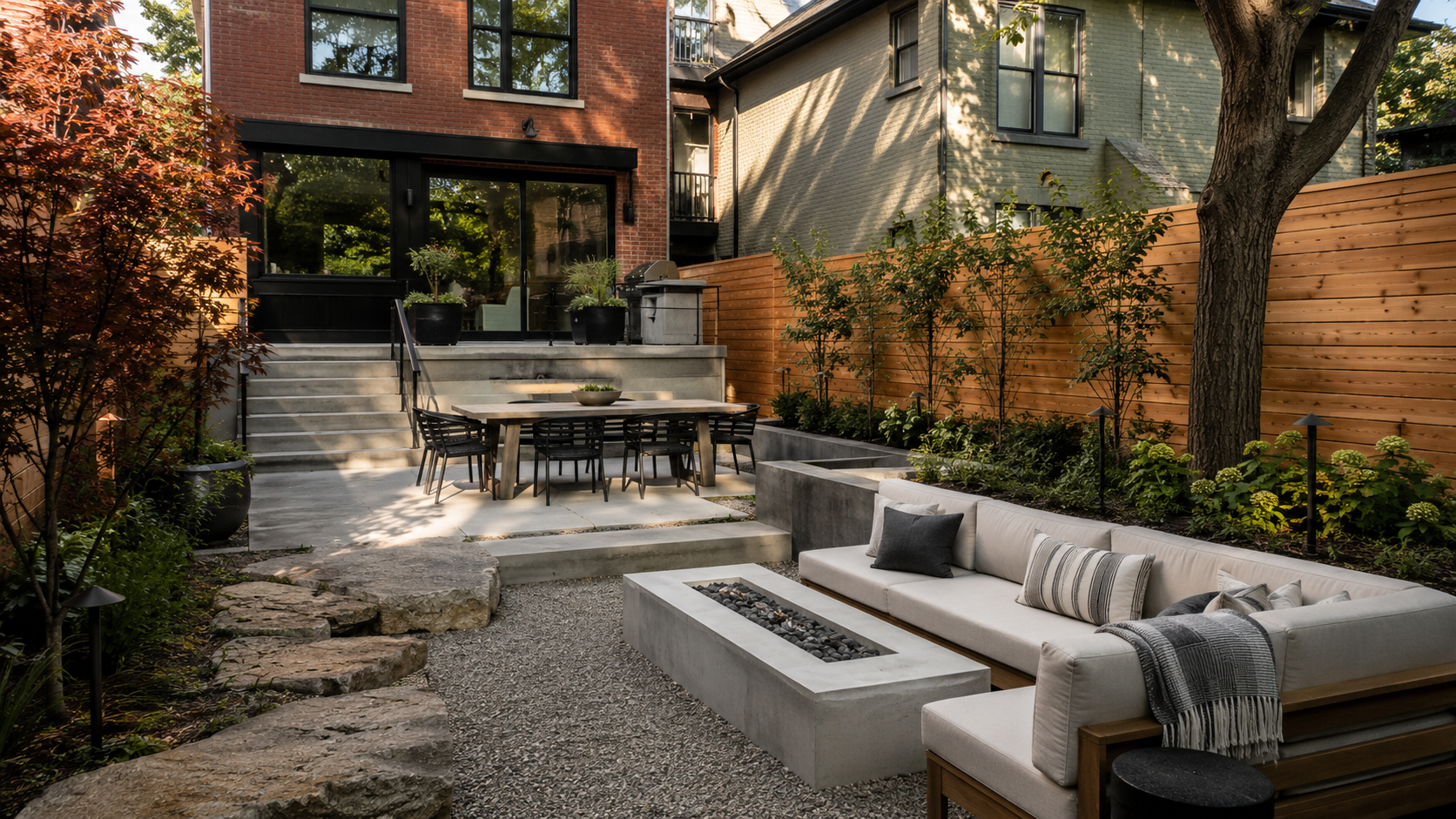
The result is visible in a specific way. The interior is good. The garden is good. The threshold between them is a gap. The sightline from the sofa to the outdoor space was not in the landscape brief. The privacy screen that was supposed to block the neighbour's upper floor window was specified from the outside without knowing exactly where the sight line originates from inside the room, so it is either four inches too short or it blocks the view the client wanted to keep. The outdoor lighting was designed independently of the interior lighting, so the room at night looks into either a dark rectangle or a glare zone depending on which switch is on.
None of these are failures of competence. They are structural outcomes of splitting a single brief into two separate documents.
The threshold between interior and exterior is not a boundary. It is the most consequential design moment in a house that has outdoor space. A material decision that carries from an interior floor to a terrace paving changes how the space reads from inside and how large it feels when you are standing in it. A privacy solution that was designed from both sides simultaneously — knowing where the key sight lines originate inside the room and where the problem windows are outside — solves the actual problem rather than a version of it.

Studio 1NINE1 was built to work across interior and landscape design as one brief, because the projects that treat them as one brief produce a different result than the ones that treat them as two. Not always a more expensive result. Often the same budget, spent more intelligently because the decisions were made with both sides of the glass in view.
We cover both scopes in the Design Direction Session, which is the right place to understand what a project actually requires before the brief gets split in a way that is difficult to reassemble.